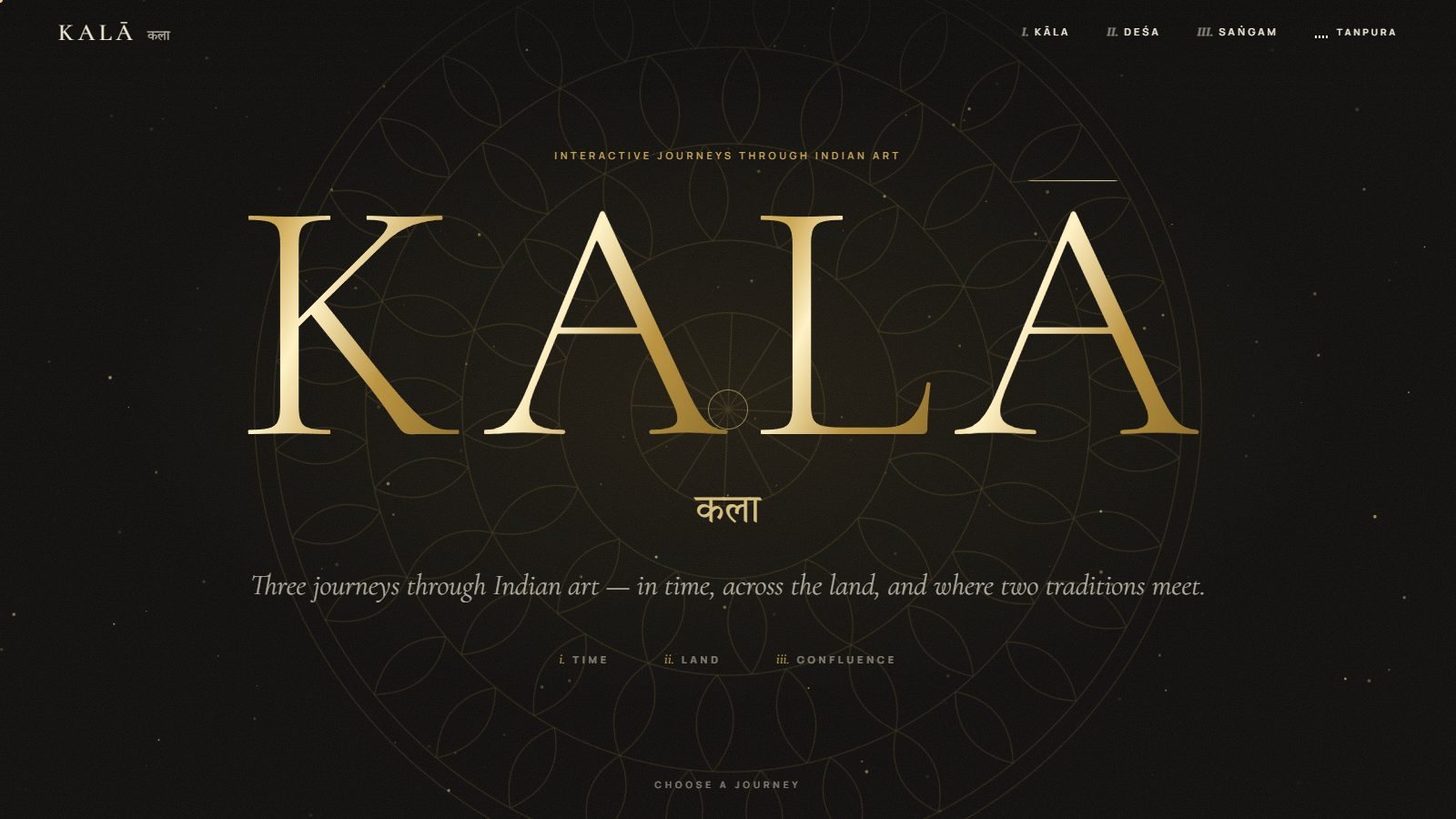
KALĀ
Three interactive journeys through 5,000 years of Indian art.
- Year
- 2026
- Role
- Co-creator
- Team
- Team of 4
- Stack
- JavaScriptGSAPLenisD3SVG
01 — The problem
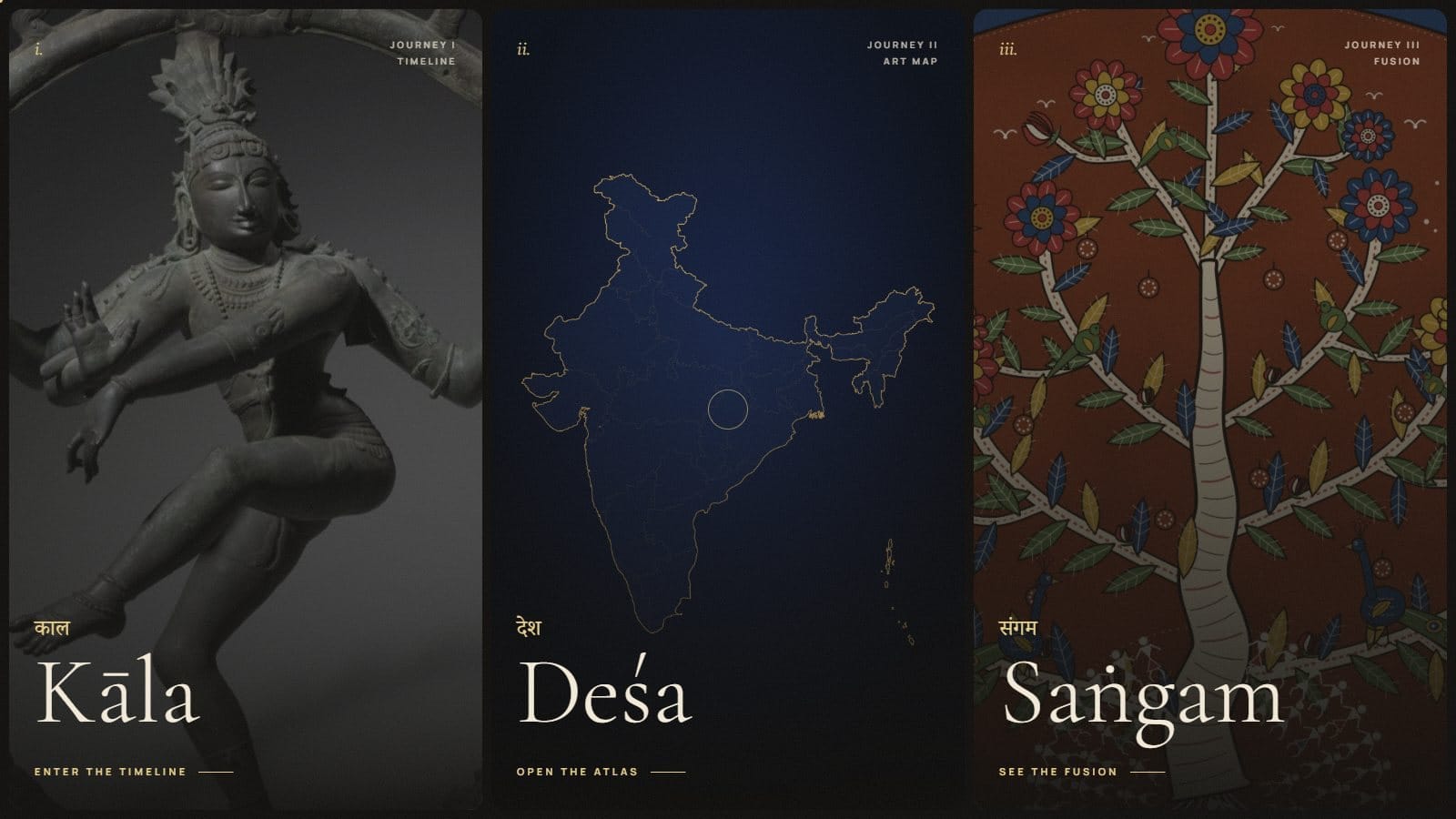
Kalā means art; kāla means time. A museum walk through ten eras, an atlas of where India's art traditions were born, and an original Warli × Kalamkari artwork drawn entirely in code.
Indian art is usually presented as a list of names and dates. We wanted it to feel like walking through a museum, reading a map and watching a painting being made.
02 — What it does
Kāla, the timeline
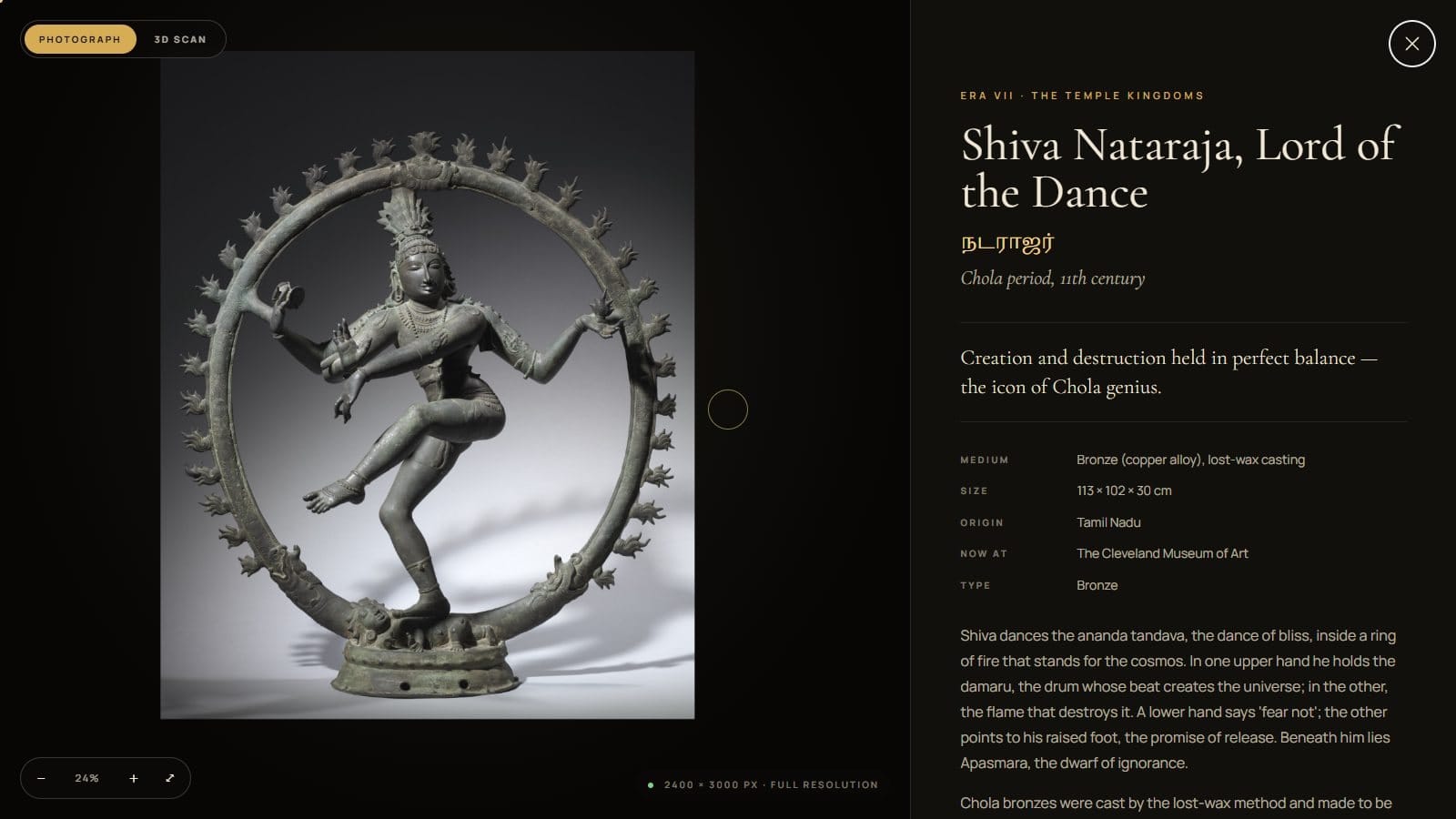
Scrolling becomes a sideways walk through ten halls, from the Indus cities to the modern age, with lit display cases, deep zoom and real 3D museum scans.
Deśa, the atlas
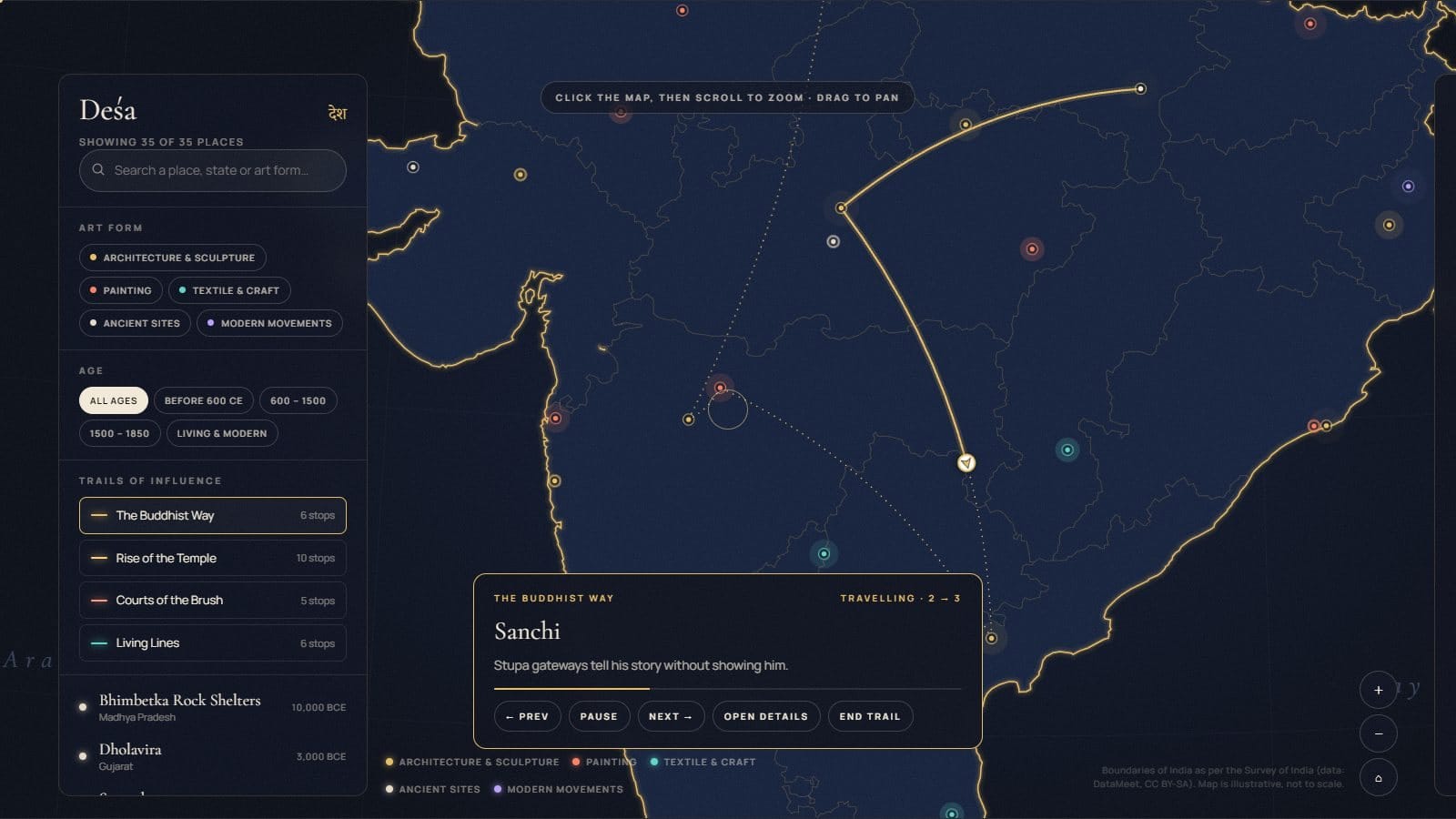
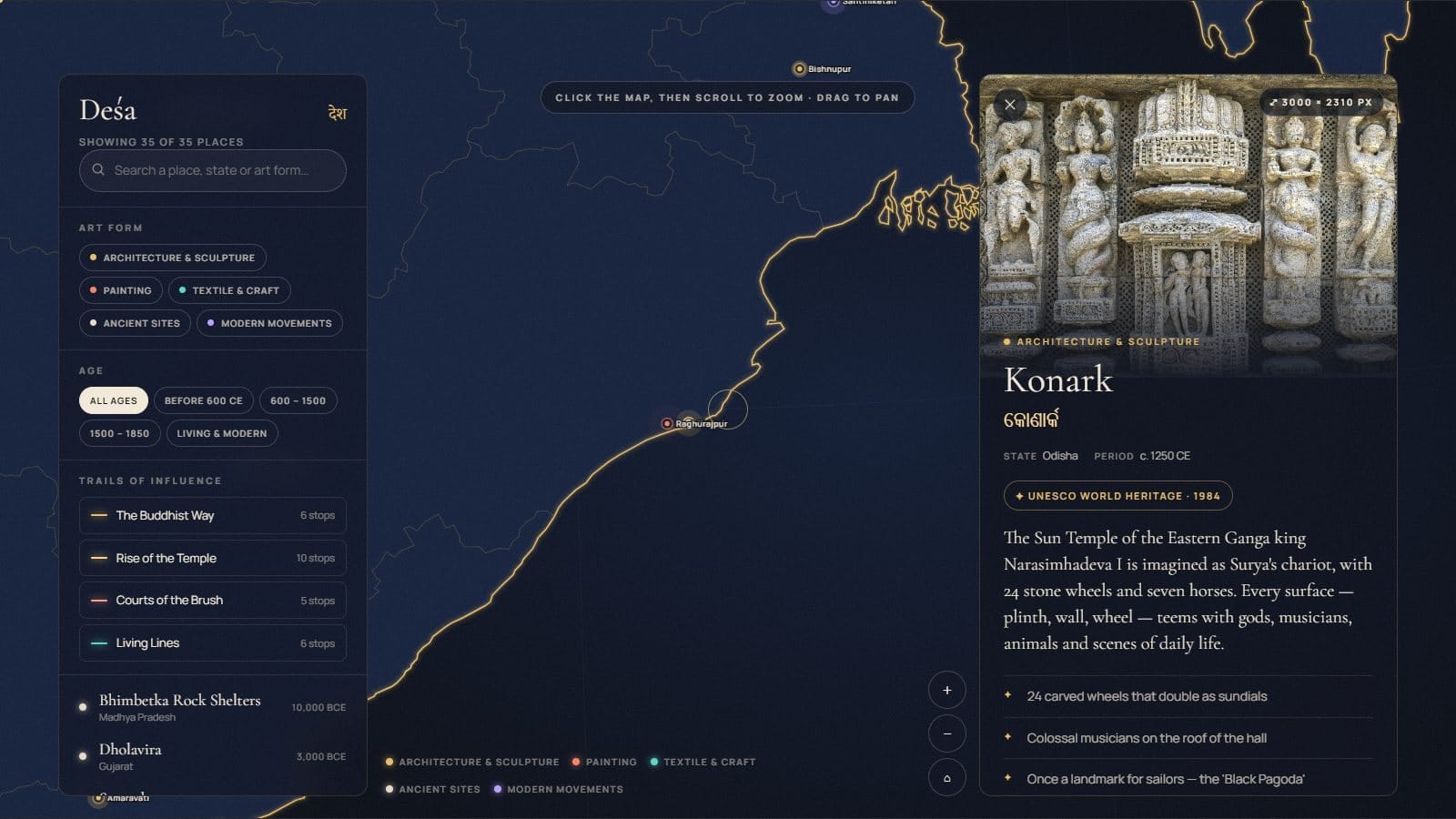
A custom SVG map from Survey of India boundaries with 35 places and animated trails showing how styles travelled.
Saṅgam, the fusion
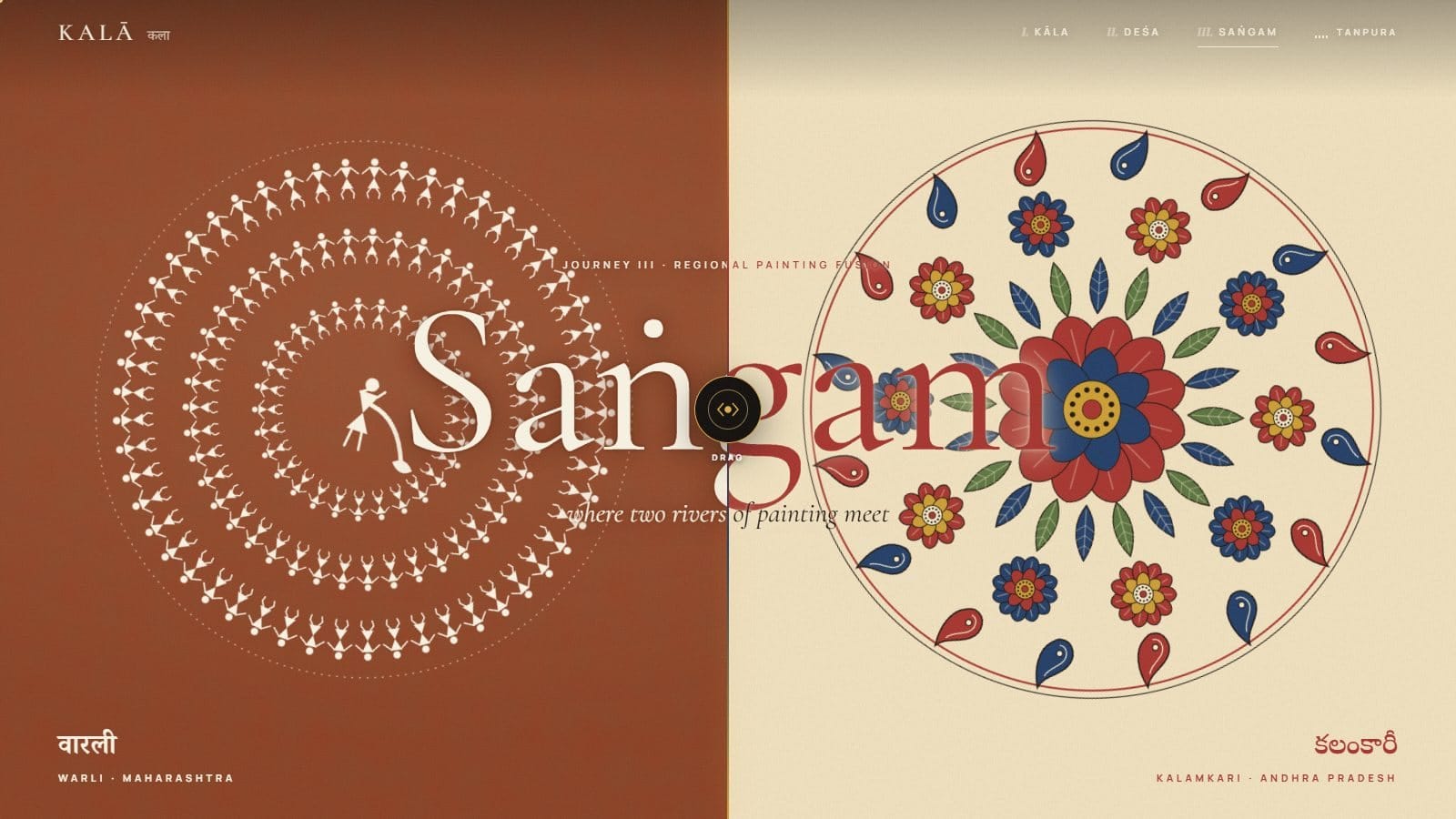
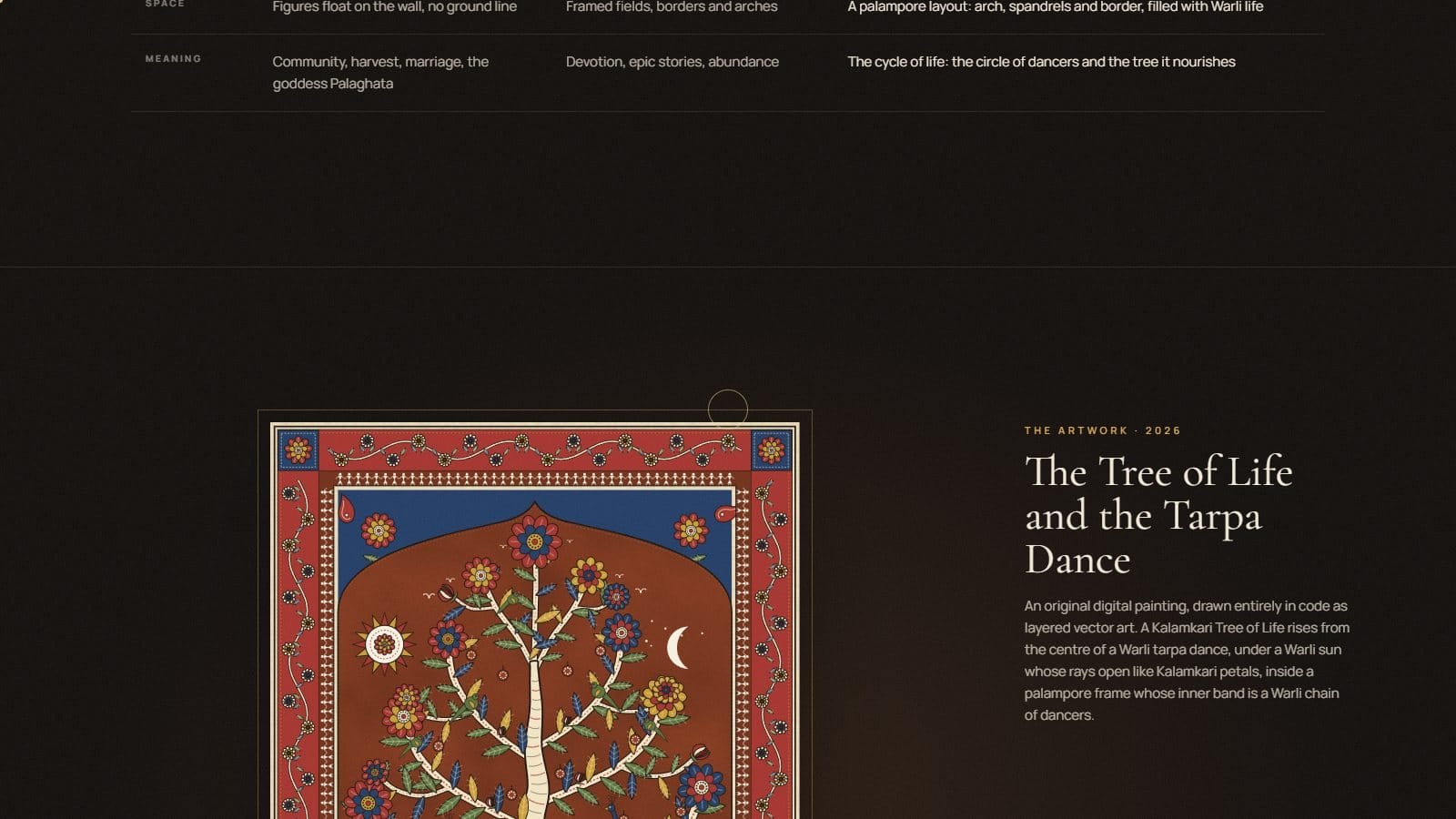
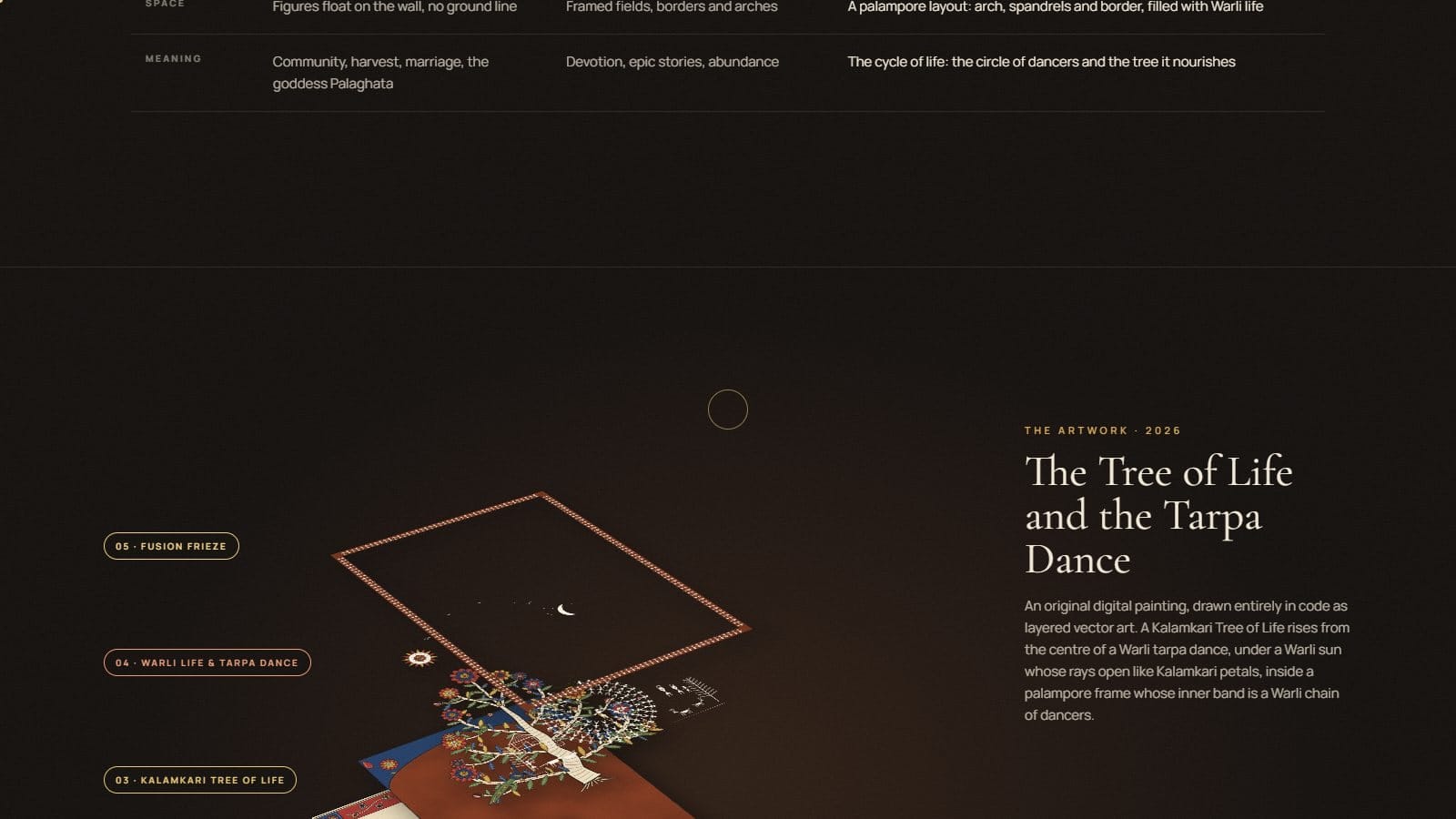
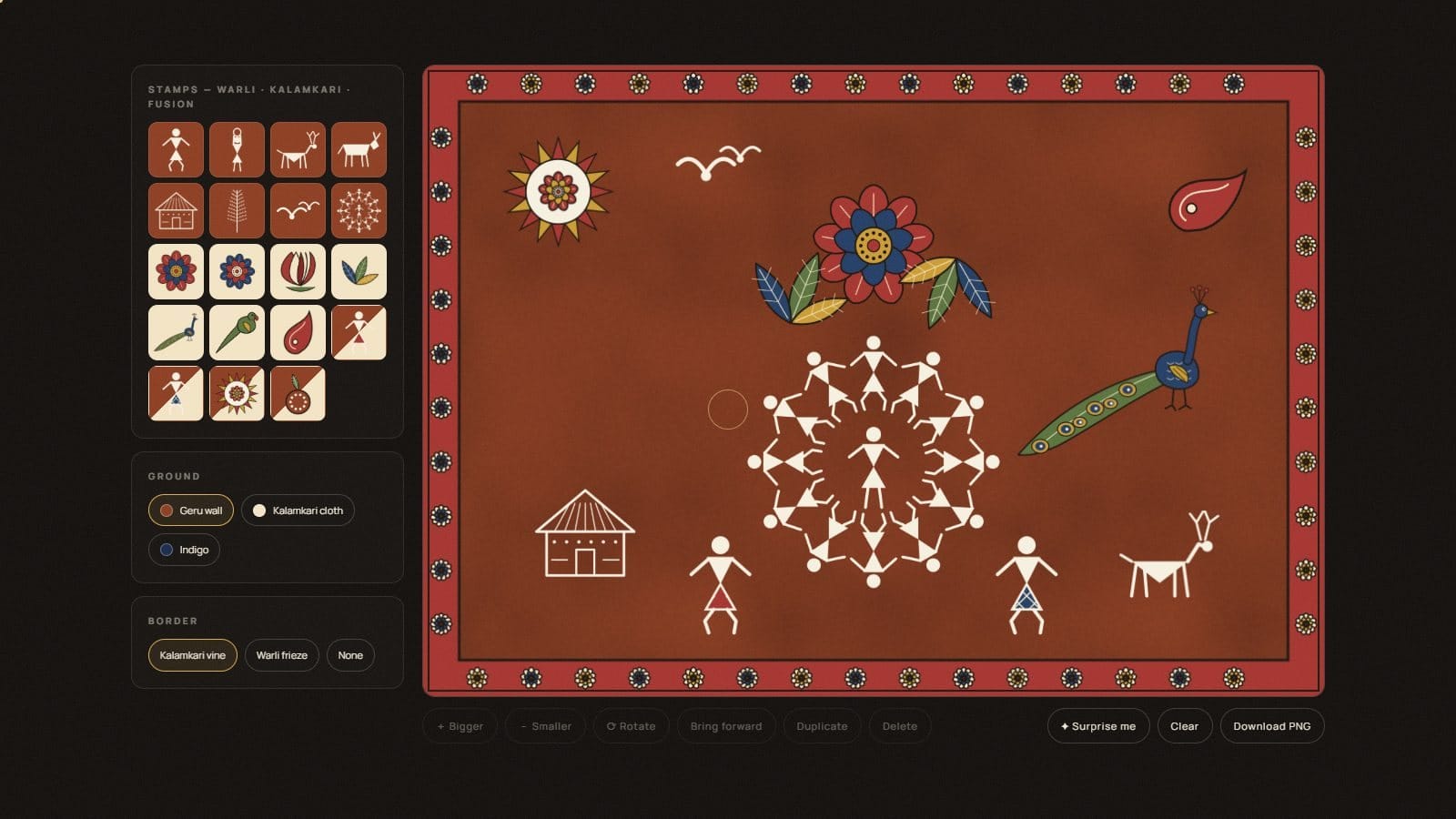
An original artwork fusing Warli and Kalamkari, generated as five SVG layers you can isolate, explode in 3D or remix in a studio.
03 — How it works
- 1
Hand-written HTML, CSS and JavaScript with no framework. Motion uses GSAP (ScrollTrigger, SplitText, Flip) and Lenis smooth scrolling.
- 2
D3 handles the map projection (Lambert conformal conic) and zoom; boundary data is simplified and pre-projected into SVG paths.
- 3
The Warli and Kalamkari motifs are procedural SVG functions shared by the artwork, the hero and the studio.
- 4
Textures are baked into cached raster patterns, off-screen sections skip rendering, and an optional tanpura drone is synthesised live with the Web Audio API.
In pictures
9 screens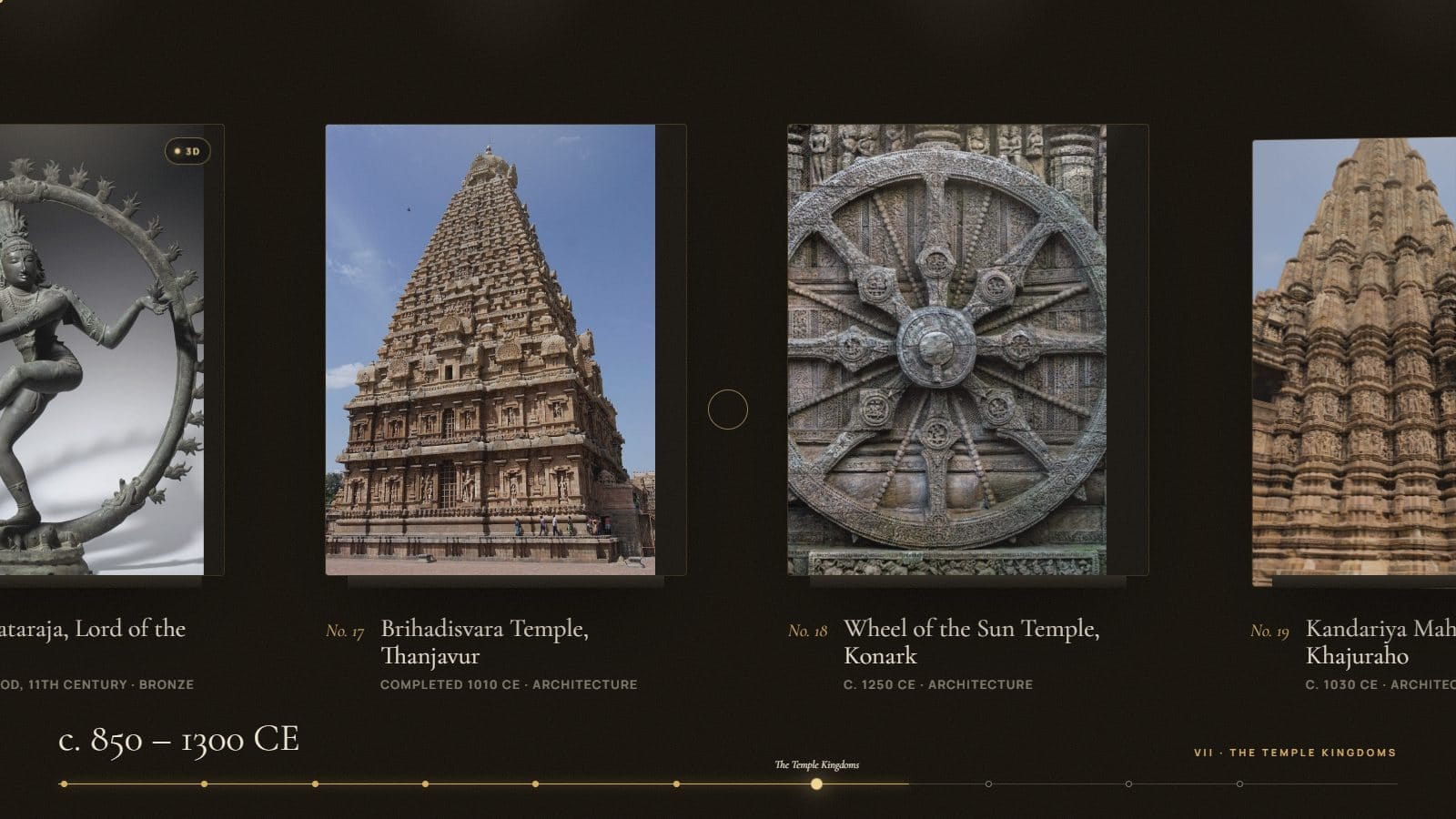
WSF
An AI safety system that acts before anyone presses SOS.